You lay out a line of words
Our lived experiences are not like paragraphs in an argumentative essay, we do not lay them out to prove a preexisting notion, rather, it is the writing process itself which guides us to meaning, sometimes leaving us with more questions than when we started.
When you write, you lay out a line of words. The line of words is a miner’s pick, a woodcarver’s gouge, a surgeon’s probe. You wield it, and it digs a path you follow. Soon you find yourself deep in new territory: Is it a dead end, or have you located the real subject? You will know tomorrow, or this time next year.
Annie Dillard, The Writing Life
Many of us believe we are not writers, and furthermore, that we don't know how to write. (How could we possibly know considering the writing process is, for most of us, completely invisible?) What is visible to the ‘non-writer’ is the writer’s finished product: the book. The writer's journey from a blank page to the final story is completely unknown.
As a young person, I didn’t know any writers. Any information I gleaned about the writing process was very academic. It was as if a template for writing an argumentative essay had been repurposed for a creative project (decide on your motivation/thesis, map out your introduction, your middle, your conclusion!) It seemed that once you had all these pieces in place you could go ahead and assemble your story as if it were something from IKEA. (Guess what everyone, it’s not like that.) Of course, planning and plotting is how some writers do their best work, but writing, for all of us, is much harder than these guides and templates would have us believe.
It wasn’t until I was a postgraduate student that my writing teacher suggested we ‘write into’ our story. This was transformative for me. It was okay to not know where your writing was going. It was enough to have an inkling that something was worth writing about… to see where the words might take you. Like Dillard, to simply ‘lay out a line of words’.
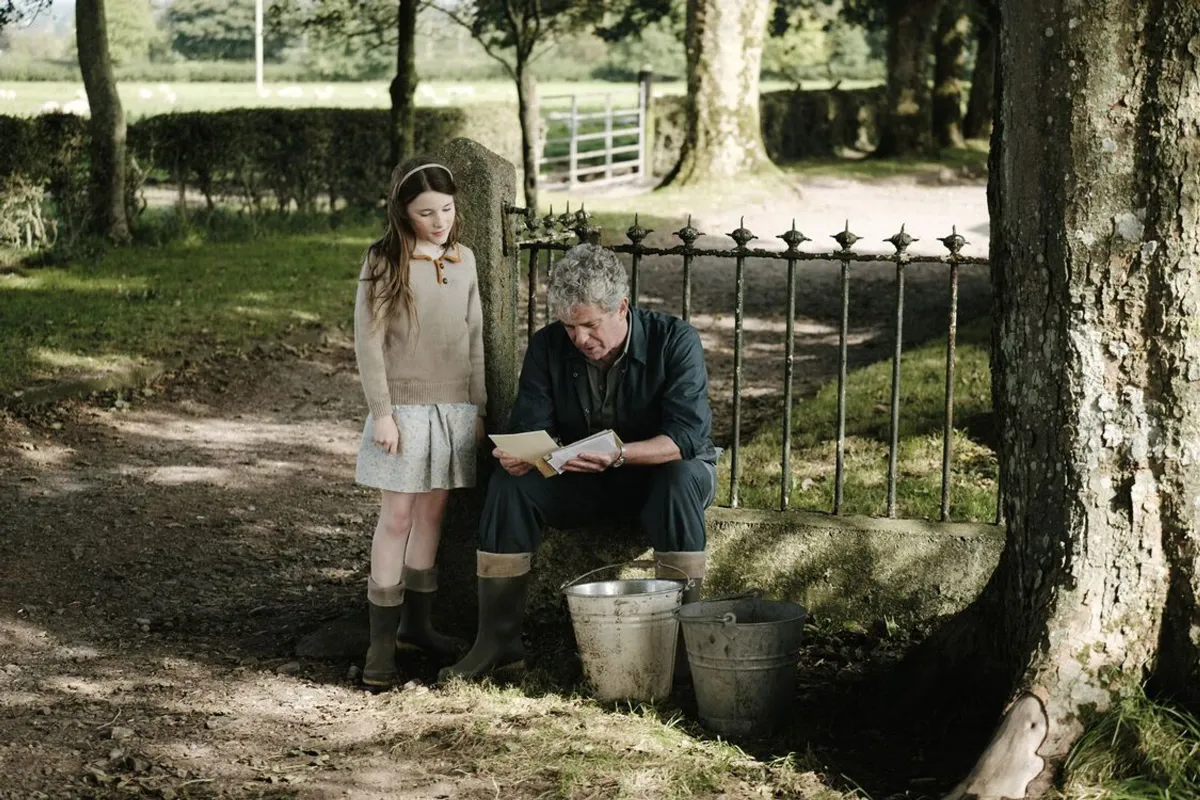
In the creative nonfiction course I teach with my friend Liza, we look at the way that writing about our lived experience can help us make sense of our own stories. Of course, our lived experiences are not like paragraphs in an argumentative essay: we do not lay them out to prove a preexisting notion, rather, it is the writing process itself which guides us to meaning, sometimes leaving us with more questions than when we started. This can be true of the process of writing fiction too. Claire Keegan’s brilliant novella Foster began with a single image: "a well, a bucket and a girl's reflection in the water”… "That often happens," she says. "I have to write a story to make an image go away. It's like an elbow nudging you into examining something you don't quite understand, but need to. For me, writing is a way of understanding something and, as such, a journey into the unknown."
We are led to believe our lives should be like something from IKEA too - we just have to assemble those parts! In these uncertain, chaotic, violent and unsettled times that we live in it’s unhelpful to peddle this illusion - for none of us are ultimately in control, or ever were. But I don’t mean that with despair. On the contrary, it is okay to not know where we are going, it is enough to have an inkling that something is worth following. For all we can do is dig out a path, and whether we get to new territory, or a dead end, we must simply continue in a faith that we will ultimately find our story.
Is there a moment in your life that you’d like to write about? An image that you’d like to explore further? Why not try laying out a line of words, and then another, and see where it might take you? All you need is a pen and paper, and 10 minutes to begin.