Wuthering Heights and the creative life.
What gives one the confidence to forge ahead, to believe they have something worth saying, worth creating?
Happy new year everyone,
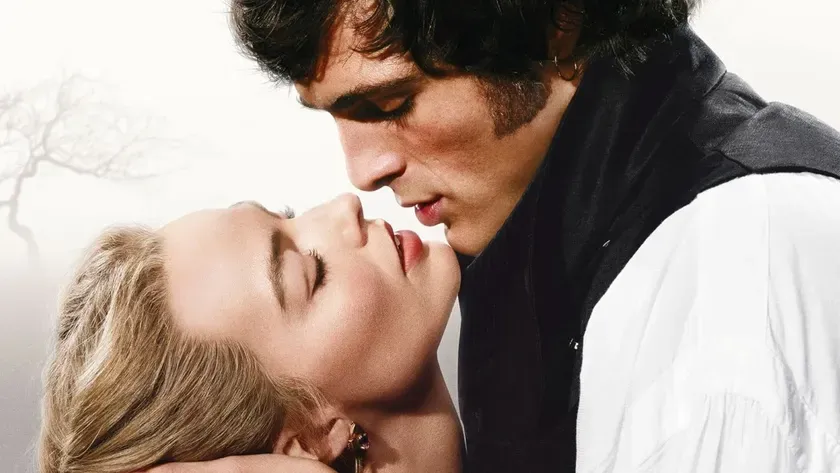
In need of a book, and propelled by the forthcoming movie adaptation, I read Wuthering Heights for the first time over the Christmas hols. Despite the backdrop of a Brisbane heatwave, the misty world of the Brontë’s took hold: I was decidedly spooked - convinced that a little hand was rattling my window at night and that the umbrella tree outside was, in fact, a person.
In an effort to un-“moor” myself, I set about expanding my reading beyond the novel to the world around the text - that of Victorian England.
I had the impression (and apologies to all Brontë fans for my ignorance) that the Brontë sisters were geographically isolated - living a bleak, wild and gothic existence on the Yorkshire moors. However, they lived in an industrial village, Haworth, on the edge of the moors. Haworth’s main industry was textiles, yet the village also had booksellers, inns, grocers, surgeons, a clockmaker, orchestral concerts, a Mechanics’ Institute and various societies. Due to poor sanitation, overcrowding, and a contaminated water supply, the average lifespan in Haworth during the Brontë’s time was just 25 years.
The recurrent themes of the outsider and isolation we see in the Brontë’s work is perhaps more about their social isolation than geographical - their Irish father, Patrick, was posted to Yorkshire to take on the role of the village curate, in his own words a “stranger in a strange land”. Despite the family’s efforts to ‘assimilate’ (including anglicising their name) the Brontës faced discrimination and prejudice with multiple instances recorded. To note, Wuthering Heights was published (under a male pseudonym) in 1847, the most devastating year of The Great Famine. It was during this time that the most influential paper in Britain, The Times, dedicated considerable space to the argument that the Irish were responsible for their own starvation due to their character, indolence and “moral defects”- a widely held opinion amongst British officials of the era.
Of course, the sisters were subject to additional discrimination in male dominated, deeply patriarchal Victorian England - specifically in relation to publishing. The Brontë sisters’ first book was a collection of poems which they had published (and self funded) under male pseudonyms. As Charlotte said:
“We did not like to declare ourselves women, because … we had a vague impression that authoresses were liable to be looked on with prejudice; we had noticed how critics sometimes use for their chastisement the weapon of personality, and for their reward, a flattery, which is not true praise.”
A vague impression indeed. Self-funded publication was not an uncommon model offered by publishers at the time. This is also what Jane Austen resorted to: a publisher agrees to publish the work, but the author fits the bill. Forty odd years after Emily Brontë was writing, a writer and illustrator by the name of Beatrix Potter could not even find a publisher interested in taking her on, self-funded or not. She ultimately managed and funded the small print run of her book herself … something about a little rabbit called Peter.
What gives one the confidence to forge ahead, to believe they have something worth saying, worth creating? Particularly at a time when “authoresses were liable to be looked on with prejudice” - a time when the idea of a woman having ideas of her own was.. not really an idea - it would be more than 80 years after the publication of Wuthering Heights that women gained equal voting rights to men in England.
One striking similarity between the Brontës, Jane Austen, and Beatrix Potter is that they all had fathers who wholeheartedly believed in them (and of course, some means in which to provide access to books and education). These fathers served as a bridge into the patriarchal world for their daughters, with just a few examples of their efforts listed below:
- Austen’s father, the Reverend George, gave Jane a writing desk for her 19th birthday, access to his large library and even wrote to a publisher in London, offering to cover the costs of printing Pride and Prejudice (the publisher still rejected it).
- Patrick Brontë encouraged wide reading and educated his daughters in subjects usually reserved for men. He fostered their love of poetry and interest in politics and social justice.
- Beatrix Potter’s father gave her access to a wide range of reading material, encouraged her interest in science and natural history, and took her to art galleries and museums.
Essentially, all three of these fathers cultivated the intellectual and creative lives of their children, instilling in their daughters a belief that their ideas mattered. It was a radical approach for their time, and so too were the results.
And yet, even now, there is something radical about encouraging and cultivating a creative life. We live in a world where, somewhat absurdly, it is more socially acceptable to watch tv or look at the internet in the evening than it is to write a poem. I’m not suggesting we should all stop viewing our favourite series, but we must acknowledge that as a society, we endorse passivity (watching a screen) and are wary of creative practice. When the attention economy is a thriving, multi-trillion dollar force, it becomes an act of resistance to take back one’s interior life. It’s no wonder we need encouragement to do it.
Encouragement need not be a grand gesture - it could be by reading the draft of a friend’s story, listening to a child play a musical instrument, writing to the author of a book that moved us, or giving someone the confidence to start a new artistic pursuit.
Like the fathers of these literary luminaries - this year, let us be the reader, friend, colleague or family member who says your ideas matter.
Writing Workshops
For a couple of years now I have been running online creative nonfiction writing workshops with Liza Cochran as part of our Understory Writers project. I believe so much in the transformative power of writing - and how important it is to have one's own creative practice. This 5 week course is for anyone from absolute beginners to those with a regular writing practice, and focuses on the natural world and our place in it. Our next course runs from the end of February to the end of March. All classes are taught online with a small group (around 10 students) from all over the world (predominantly Australia, US and Singapore). We have had so many lovely students come through over these past few years and we'd love you to join us. Please do let me know if you have any questions. Scholarships are available.
(and please let me know if you would prefer to not receive these newsletters)
Love to all of you.
Clare