A collective imagination
I don’t think we talk enough about imagination in our public life anymore. It’s cordoned off and somewhat belittled - a remnant of childhood - “oh what an imagination you have!” Yet the ability to imagine is a powerful thing.
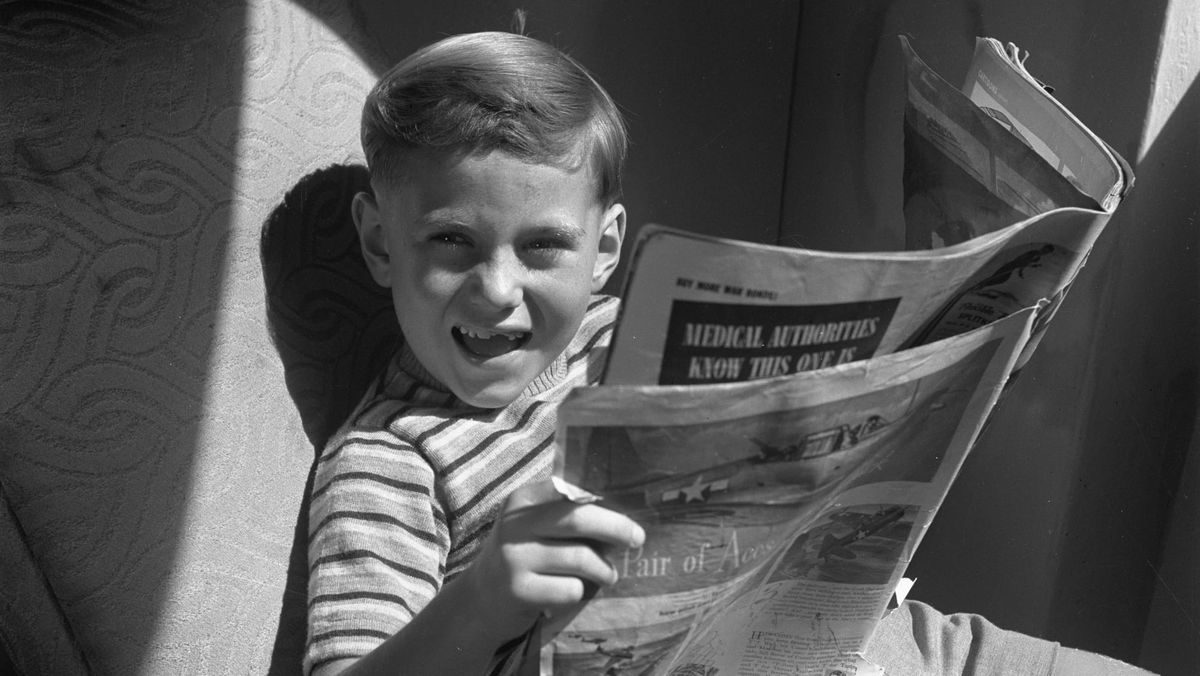
When I was in primary school, one of our rituals to start the day (along with announcements, prayers, tuck-shop orders, and a loudspeaker broadcast of Mickey’s mousercises) was reading aloud from the newspaper. We would take it in turns to read from the broadsheet which arrived at our school every morning.
“Children, this newspaper is targeted at the reading level of a ten-year-old, so you will have no problems in understanding it” my year seven teacher would say. And we did understand it too; reading the daily news gave us some grasp of global politics and affairs - albeit at a basic level. I am not implying the world was a great place then - certainly many of the atrocities and failures of that time we are only now beginning to reckon with - yet I would not suggest such an activity for primary school children today. For, to read the headlines in our current era provides one with less an introduction to civics than it does a vision of a dystopian hellscape. Today's headlines could drive even the most hopeful amongst us to despair. It is perhaps not surprising that global news avoidance is at a record high.
The despair brought on by the world we are living in causes a kind of paralysis of spirit, and so, feeling helpless and hopeless, we turn to block out this bad news with the next easiest thing to do: the consumption of other media. And it’s here that the insidious elements of the digital age (where our attention is a commodity to be bought and sold ) are at work to keep us locked in a state of passivity, stripping us of our power to face these times with courage.
Brazilian educator and philosopher Paulo Freire states that “hopelessness is a form of silence, of denying the world and fleeing from it”. (Maybe it is because basically everyone in my family is a teacher that my worldview is this way - but I find so much inspiration in educational theory when grappling with current times.) Critical to Freire’s theories is the idea of the role of collective imagination in social change - in our ability to perceive a better future. Inspired in her own work by the ideas of Freire, American poet Adrienne Rich said that "Despair, when not the response to absolute physical and moral defeat, is, like war, the failure of imagination".
I don’t think we talk enough about imagination in our public life anymore. It’s cordoned off and somewhat belittled - a remnant of childhood - “oh what an imagination you have!” Yet the ability to imagine is a powerful thing. A rich imagination is not a given: it must be tended to, listened to, it likes working with others, and, like a muscle, without exercise it wastes away. With the headlines as they are, we must turn our attention toward the cultivation of a collective moral imagination as a matter of urgency, to, quite literally, envisage ourselves out of this time.
There are countless examples from history of imagination leading to social and political change - from Martin Luther King Jr’s I have a dream to Näku Dhäruk (the Yirrkala bark petitions); such events have shaped our world so profoundly that our consciousness is now transformed by them. And yet, these history altering events started in the world of ideas and dreams of a collective.
One of the most powerful qualities of imagination is that, working collectively, its strength multiplies and what springs from it can outlast us. In order for this cultivation of a collective imagination, we must engage with each other, as well as with our interior lives. All of us have a part to play. As adults we must also protect the interior lives of children - it’s not so much a shielding from the horrors of the world (although of course, for the very young, that does come in to it) but an engagement with, and a passing on from, the deep reserves of story, art, creativity, and culture: essential tools to imagine a better time into being.
Freire, P. (2017). Pedagogy of the oppressed. Penguin Classics.
Rich, A. (1993). What is found there: Notebooks on poetry and politics. W. W. Norton & Company.